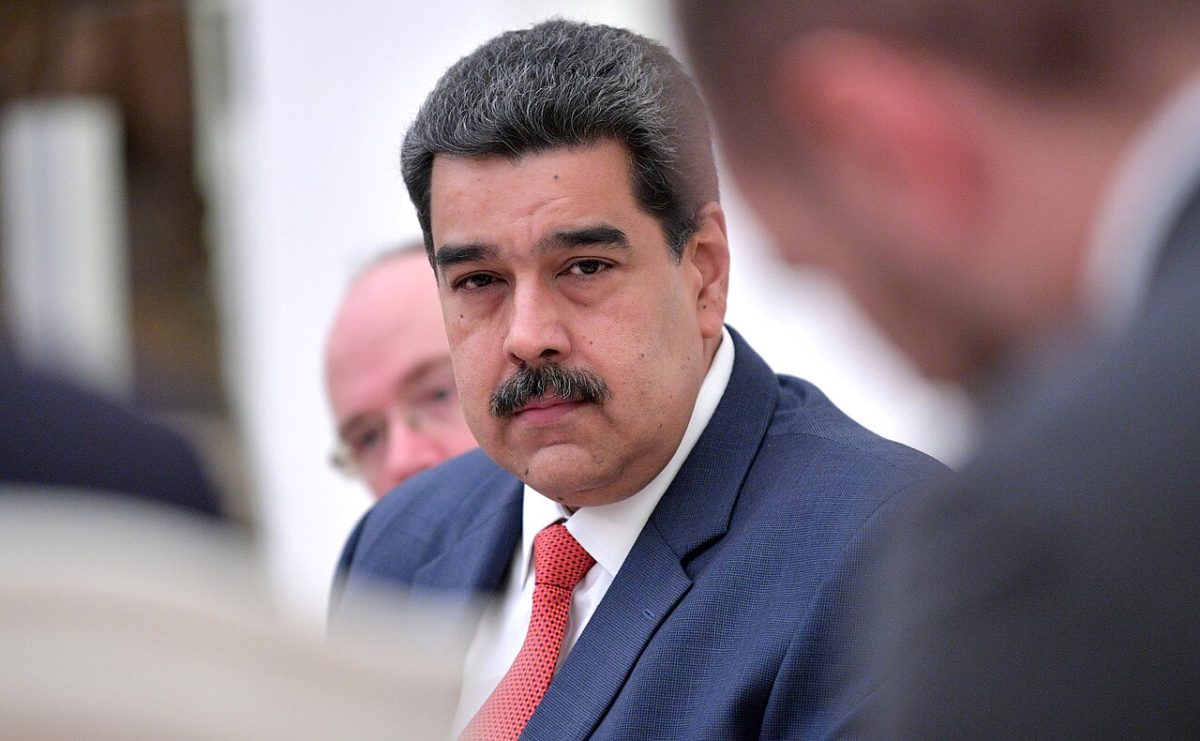
A United States (U.S.) military operation that detained Venezuelan President Nicolás Maduro reshaped relations between the two countries, sparking debate over leadership, oil interests and international alliances.
The U.S. and Venezuela have not had a good relationship since before Hugo Chávez, a former president of Venezuela from 1999 to 2013 and it continued under Maduro.
“There’s a history of animosity between Venezuela and the U.S. and that goes back to when Hugo Chávez set up the Bolivarian Republic there. When he overthrew the previous government and set up his new government,” said Neal Jesse, chair and professor in the university’s department of political science. “His successor, Maduro, has also led a foreign policy that was very pro-Cuba and pro-Russia and antagonistic to American interests. There’s been a couple of decades of difficulties between Venezuela and the U.S.”
According to an article from the Associated Press, a military operation ousted Maduro from power and the U.S. took him from the country on Jan. 3 in the middle of the night. After the seizure of Maduro and Cilia Flores, Maduro’s wife, they were transported to the U.S. by a warship and arrived by airplane in New York the evening of Jan. 3.
Currently, the new acting president of Venezuela is Delcy Rodríguez, who has been the vice president under Maduro since 2018. Rodríguez has offered to work with the Trump administration, but in a televised address, Rodríguez did not indicate that she would work with Trump, according to an article from the Associated Press.
Jesse believes that many citizens were fleeing the country when Maduro came into power.
“When he (Maduro) first came to power, citizens were fleeing Venezuela to Colombia. Columbia had to shut its border to prevent all those millions of people basically leaving Venezuela trying to get into Columbia,” Jesse said.
Jesse said the U.S. did not invade Venezuela to stop the drug trade.
”We all know that Venezuela is not a big player in the drug trade to the U.S. I think, based on all these reasons about international relations that I’m talking about, we can see in these actions the bigger picture that the U.S. has been antagonistic toward Venezuela for so long. Perhaps the Trump administration saw an opportunity to intervene there,” Jesse said.
While Venezuela holds vast oil reserves, it is not important to the U.S. since no one can reach it, Jesse believes.
“It’s (oil) not really important. It will take a decade or more to try to tap those. It doesn’t have the infrastructure to actually produce. In fact, Venezuelan oil production has been declining over the last decade. So yes, Venezuela sits on one of the proven largest oil reserves in the world, but this can’t really be about oil because there’s no good way to even get to it anytime soon,” Jesse said.
Venezuela has been trading with Iran and Russia, and the U.S. is hoping to stop that trade by stopping the Venezuelan leader.
“It’s more about the trade of the oil between Iran and Venezuela and between Russia and Venezuela. That oil trade has been sanctioned, and if the U.S. can stop the oil trade by eliminating the leadership of Venezuela. I think that’s the oil angle that is more obvious than wanting to get at Venezuelan oil,” Jesse said.
Venezuela and Russia’s relationship has been strained since the U.S. seized Russian shadow tankers, which are oil tankers operated by Russia to avoid sanctions.
“Russia has been using this illicit oil trade, and the shadow tankers have been using it to help its war in Ukraine. This is another setback for Russia because the five tankers that I know of that have been seized are all Russian tankers. They’re using this trade to make money and that’s to buy weapons and that’s to fund a war,” he said.
Venezuela was trading oil to Russia; in return, Venezuela wanted protection and found out Russia did not protect them.
“Venezuela learned the same thing that Syria learned, which is that Venezuela had what they thought were agreements for Russia to help defend them and help with their security. When you are an ally with Russia and they tell you they will help, they don’t,” Jesse said.
Leadership in Venezuela is uncertain, but the capture of Maduro did not change Venezuela’s government.
“There’s no definitive answer on that, but the one thing we know is it will rely on who either remains or comes to power in Venezuela. The U.S. may have captured Maduro, but the government still remained. We have not actually altered the government in Venezuela,” Jesse said.