
Bowling Green State University (BGSU) has seen a decline in its international student enrollment in recent years, which mirrors a broader trend across Ohio’s public universities.
While the overall student enrollment has increased at several institutions, including BGSU, the number of international students is continuing to fall, raising some questions about schools’ affordability, immigration policy and campus support.
BGSU saw a 3.5% increase in overall enrollment this past year; however, the international enrollment has significantly declined. According to university data reported by BG Falcon Media, 896 international students were enrolled last fall when total enrollment stood at 19,703 students. This fall, international enrollment dropped to 590 students while total enrollment increased to 20,383, a 34.2% decrease in international students. Statewide reporting from the Ohio Capital Journal and BG Independent shows similar declines across Ohio public universities, including Miami University, Ohio University and the University of Toledo (UToledo), indicating the trend extends beyond a single campus.
An anonymous international graduate student at BGSU said the decline does not come as a surprise.
“It’s been pleasant here,” the student said. “The community is small, but there’s a lot of love and support. Churches and local organizations help international students a lot, and International Student Services provides information and guidance.”
However, the student said daily life presents challenges. One issue in particular, transportation.
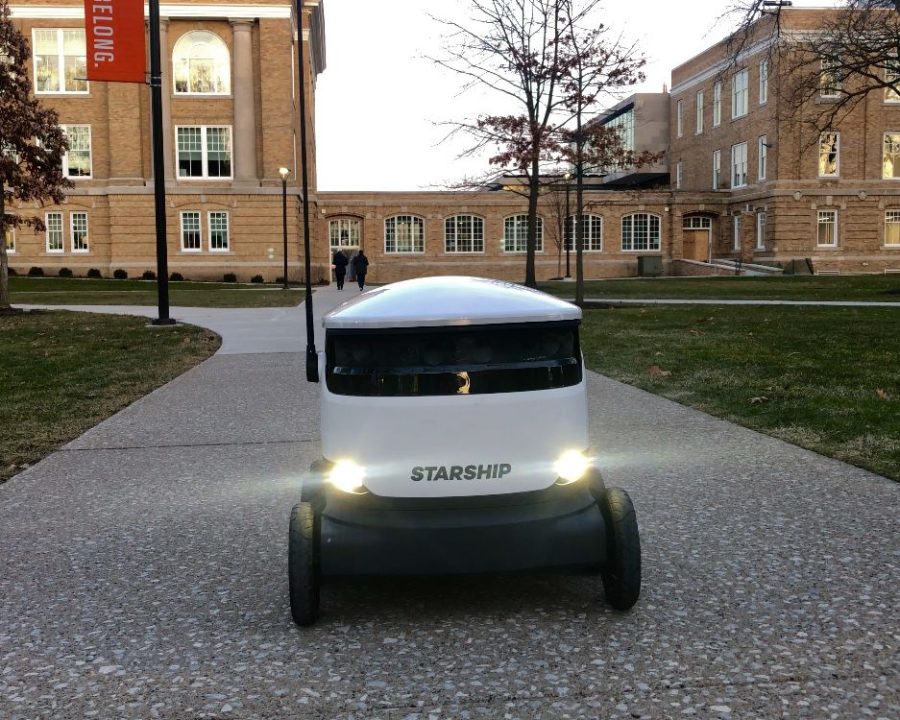
“When I first arrived, transportation was the hardest part,” the student said. “There’s no public transportation, and while the campus shuttle operates on a limited weekend schedule, routes often do not run during the day and off campus. International students can’t easily work off campus to afford a car, so you depend on whoever is available to help.”
The student said affordability is a major factor driving enrollment decisions, especially health insurance and rising living costs.
“Health insurance alone costs thousands of dollars each year, on top of all the international student fees and other expenses,” the student said. “For students coming from developing countries, that’s a lot of money out of pocket.”
Most U.S. universities require their international students to carry health insurance, typically through a university-sponsored plan, however some students can qualify for a waiver. At Ohio University, Miami University, UToledo and BGSU, international students are required to have health insurance. For the 2025-2026 academic year, Ohio University’s annual health student health insurance plan is about $2,820. UToledo is at $2,292 and Miami University is about $2,226 per year. For BGSU students, the annual cost plan for the 2025-26 academic year is about $2,546.
The student also mentioned that while many universities require insurance, the differences in cost and access are huge influences on where students choose to enroll.
“If students have a choice between a school that offers more affordable coverage or stronger support and one that doesn’t, they’ll choose the school that offers more,” the student said. “People I talk to who are considering studying in the U.S. often decide not to choose BGSU because of the costs.”
On top of health insurance costs, rising rent, utilities and transportation costs cause even further strain on the international students’ budgets, the student added.
“Stipends haven’t increased, but living expenses keep going up,” the student said. “It doesn’t always make sense financially.”
Beyond finances, visa processing delays and high denial rates are also discouraging to a lot of international students.
“Some embassies don’t clearly explain why visas are denied,” the student said. “People qualify for everything and still get denied or have to defer for another semester.”
Concerns about immigration enforcement and safety also weigh heavily on students’ decisions.
“Students see the news and people being treated badly because they’re not citizens,” the student said. “If someone has a visa or even a green card, they may not feel safe and that’s making a lot of people hesitant to come to the U.S. for higher education.”
While all the immigration policies are publicly available online, the student said the complexity of the process and documents creates confusion and fear.
“Not everyone can afford a lawyer to explain the process,” the student said. “There’s a transparency problem in how policies are communicated.”
Despite these challenges, the student said the Bowling Green community remains welcoming.
“The community is great,” the student said. “A lot of the support comes from outside the university, and that’s what makes the experience positive.”
The student believes BGSU could improve support for international students by increasing stipends, expanding transportation options and improving communication from International Student Services.
“They’re professional, but sometimes too closed off,” the student said. “More open communication and more resources would help a lot.”
When asked whether they would recommend BGSU to students from their home country, the student expressed hesitation.
“With other options available, I would probably recommend a different school,” the student said. “The fees and health insurance costs are just too high here.”
In response to the drop in international student enrollment, the university says, “As a comprehensive university, Bowling Green State University values a global perspective in fostering a robust learning community, bringing together people from across the state, nation and world to Bowling Green. While traditionally, we have not been a university with a large international student population, and our enrollment growth has been largely driven by a domestic student population, we continuously evaluate our work in strengthening and evolving pathways for students from around the world to attend Bowling Green.”