

As winter weather brings freezing temperatures and icy conditions to Ohio, Bowling Green State University (BGSU) offers safety tips to students and the policy on closing campus.
The decision to cancel classes is determined by the president of the university, the provost or the senior vice president. The decision to close the campus is determined by the president or the president’s designee, someone authorised to make a decision when the president is absent. The campus will close only for a significant and unanticipated event like a natural disaster, weather and more, according to the policy of Emergency Cancellation, Delay and Closing.
The difference between cancelling class and closing the campus is that, for cancelling class, employees will still report to work at their scheduled times. To close the campus, only necessary employees will report to work, according to the policy of Emergency Cancellation, Delay and Closing.
Michael Campbell, director of public safety and chief of BGSU Police, advises the president or the president’s designee on their decision to close the campus.
“In my role, I do provide information related to weather conditions to help inform any decisions being made,” Campbell said.
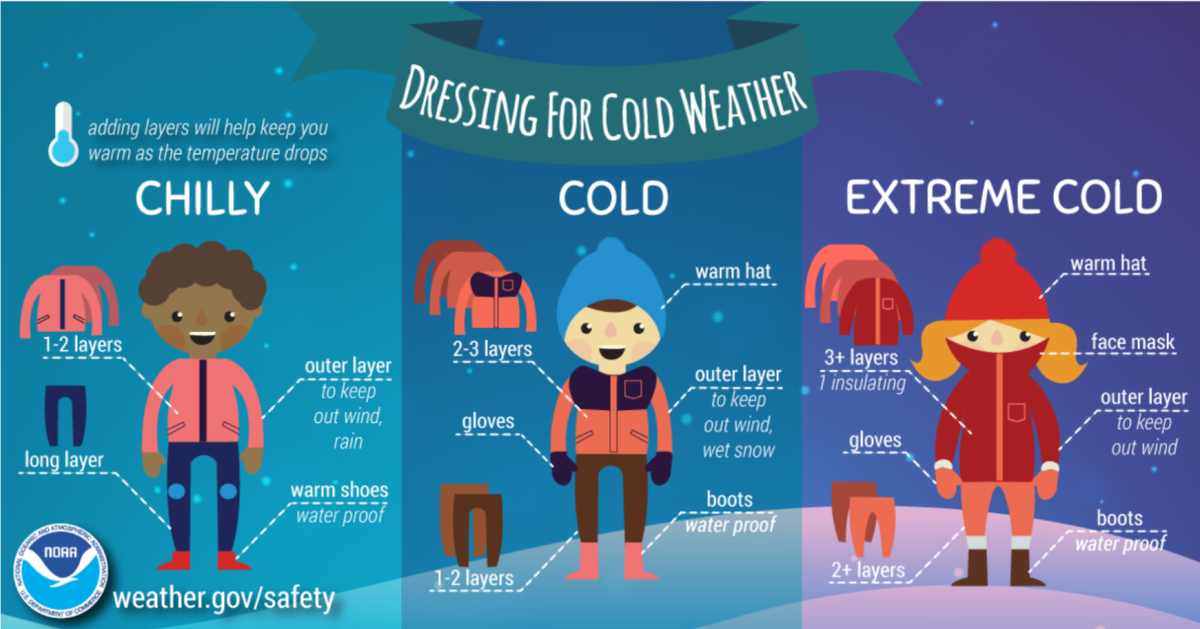
The cold is staying for a while, so students should layer up their clothes and stay inside if they can, Campbell advises.
“Extreme cold weather may occur due to wind chill or air temperature. In either case, when students go outside, they should dress in layers, cover all exposed skin and limit their time outside,” Campbell said.
Alexis Shadley, a freshman on-campus student, said she finds it hard to walk anywhere when the sidewalks and weather are bad.
“It’s really hard to find the motivation to get out of bed when there’s ice on the sidewalks and the fear of slipping on the way to classes. Also, just being freezing, trying to walk across campus, that’s at least a 10-minute walk from my dorm,” Shadley said.
Campbell suggests that off-campus students who drive should make sure to buckle up, pay attention and plan ahead before driving.
“Safely operating a motor vehicle by buckling up. When driving in inclement weather, keep your focus on the roadway, avoid distractions, plan your route and adjust for the weather conditions, including making additional time for your commute,” Campbell said.
Driving in these weather conditions is not as easy as it sounds with the snow and ice, Campbell said.
“It’s actually really hard. It’s probably harder than you imagined. Actually, yesterday [Jan. 15] we had a snow advisory, and my car was not able to start, so I wasn’t able to make into campus. Another reason is the icy conditions. It’s really unsafe for people to drive out into the snow, into the ice,” said Jordyn Pakulski, a sophomore off-campus student.
Students walking to their classes need to pay attention to where they are with ice and snow in their path, Campbell advises.
“In times when winter weather might impact someone’s walk, individuals can take precautions like walking slowly, wearing shoes/boots with good traction and, if possible, avoiding and/or watching for slippery areas,” Campbell said.
Some students say winter weather can make getting to class difficult, adding that because of the conditions, it’s not their fault.
“Maybe on those days, make it okay to be late because it was not my fault. My car didn’t start, and I couldn’t be here for class,” Pakulski said.
Shadley expressed concern about the safety of walking to class during dangerously low temperatures.
“I definitely think that if it feels like it’s going to be in the negatives, I think the university needs to close campus, because that’s just dangerous to walk around campus when it feels like minus 5 degrees outside,” Shadley said.
If a student or staff member lives off-campus and the county is at a Level 3 snow emergency, just notify your supervisor or your professors, Campbell advises.
“In some cases, during extreme weather, individuals who live outside of Wood County may find that their county of residence is under a Level 3 snow emergency when Wood County is not, making it illegal for them to drive in their own county unless they are essential employees of the university and need to report to campus. In those circumstances, employees should notify their supervisor that they cannot drive to work,” Campbell said.
According to the National Weather Service, Wednesday will be partly sunny and cold with a high near 10 degrees, and on Wednesday night it is mostly cloudy with a low around minus 2 degrees. Thursday is going to be mostly sunny with a high near 12 degrees, and at night it will be partly cloudy with a low around minus 5 degrees.
On Friday, it will be mostly sunny with a high near 11 degrees, and Friday night it will be partly cloudy with a low of minus 1 degrees. Saturday is mostly sunny with a high near 17 degrees, and at night it will be partly cloudy with a low around 1 degree. Sunday will be mostly sunny with a high near 20 degrees, according to the National Weather Service.
The university’s weather policies: https://www.bgsu.edu/news/2017/01/emergency-weather-policies.html








Chris • Jan 28, 2026 at 6:14 pm
As a commuting student, I do feel that classes needed to be canceled the last few days. The roads and parking lots on campus were still in bad shape when I left school this evening– you cannot see street lines/markings on roads or pavement on parking spaces. Additionally, walking up to buildings was still very slippery and not hospitable for people with accessibility concerns. Also commuters who do not have 4wd capable transportation are affected. If BGSU is adamant on remaining open, their facilities managers need to be more prepared and do a better job taking care of the snow.