
Last year, dozens of students received cords and stoles celebrating their accomplishments during Lavender Graduation, Black Graduation, Celebration of Asian Graduates and the Latino/a/x Graduation hosted by Bowling Green State University (BGSU).
This year’s graduating students are hosting and planning their own celebrations this semester without university support following Senate Bill One (SB1)’s implementation in June.
This bill also led to the disbanding of BGSU’s Division of Inclusion and Belonging, which hosted the celebrations until this year.
According to past reporting from BG Falcon Media, these affinity graduation ceremonies recognized students from underrepresented backgrounds and aimed to create a sense of belonging.
Under SB1, the ceremonies are banned, as state institutions must “prohibit all policies designed explicitly to segregate faculty, staff or students based on those individuals’ race, ethnicity, religion, sex, sexual orientation, gender identity or gender expression in credit-earning classroom settings, formal orientation ceremonies and formal graduation ceremonies.”
However, celebrations can be held if they are sponsored by student organizations. Multiple student organizations are hosting their own this year.
At time of publication, BG Falcon Media hasn’t received a comment from university officials regarding more information on SB1.
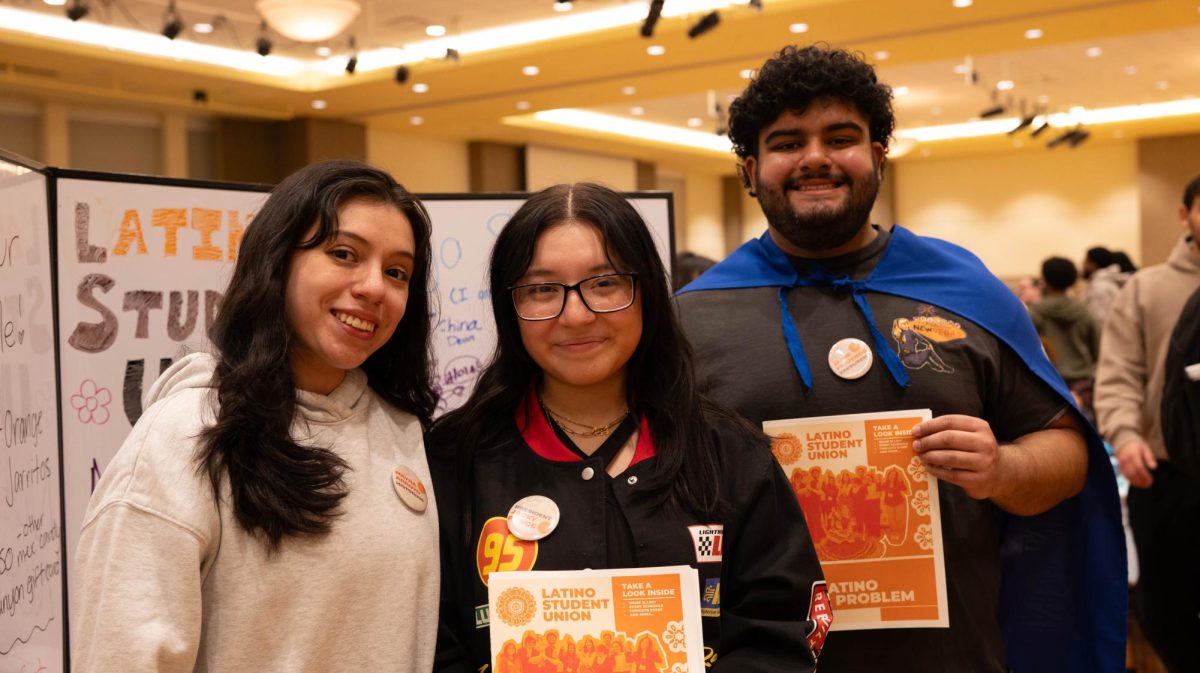
BGSU’s Latino Student Union (LSU) is planning to host a celebration on April 18, as well as BGSU’s Black Student Union (BSU) on April 19.
Senior Mayra Arroyo, historian for LSU, said the group’s advisors were a large help with moving forward after SB1 and seeing how the bill would affect both the organization and the annual graduation event.
“We were kind of bummed out, but our advisors were like, here are some steps we can take, we could do fundraising, we can do it ourselves,” she said.
Bart Reamer, president of BGSU’s Queer Trans Student Union (QTSU), said the organization is currently trying to plan a celebration, but has to figure out a time and rally volunteers, especially now that it’s solely up to the organization.
“We do want to continue that tradition, but it is a matter of when students have time,” he said. “People aren’t paid to organize them anymore, so it really comes down to time and passion.”
LSU reached out to the Student Organization Allocation Board (SOAB) for the event’s funding, which is for recognized student organizations to request funding for programming expenses.
Arroyo said they also relied on fundraising to help come up with the money for this month’s event.
“We knew that our funds were going to get cut short, and we obviously didn’t want to just cancel all of the events. We kind of just needed to come up with the money ourselves, as well as other funds that we had,” she said.
Arroyo said LSU’s celebration highlights the achievements of Hispanic and Latino students and brings together those that’ve gone through similar experiences.
“We don’t have the same opportunities as other people. We have to go through more hoops, as a lot of our parents didn’t really go through college, or barely graduated high school. So, we’re kind of navigating this whole college thing on our own,” she said.
She said the event also aims to motivate underclassmen who might be struggling early in their college career, as their organization shows that others are in the same boat as them.
“Sometimes it’s just nice to get the recognition, like even though it was hard, you still made it, you still did it,” Arroyo said.
Kameron Bridgeforth, president of BSU, said it was a weird shift planning the celebration this year, because their organization didn’t take part in that process in the past.
“Everything is on us. So, having to find funding for the event, and having to spread awareness that this is still happening,” he said.
Bridgeforth said by organizations working hard to put on the celebrations for graduates, it shows they have dedication.
“It just shows the level of care and intention that we’re still willing to have these programs and still willing to put these on,” he said.
Reamer said these celebrations on campus help to show acknowledgement for students on campus who aren’t typically recognized as much.
“It’s important for a lot of different identities. If anything, there should be more identity graduations, or these stole celebrations,” he said. “I think people should be as represented as possible.”
Both Reamer and Bridgeforth said after this year, their organizations will most likely have an easier time planning these celebrations after knowing what all it takes to make it happen.
LSU recommends that eligible students reach out to the organization if they cannot attend the celebration to receive their stole on a different date, and reach out for more information about the celebration.
For more information about BSU’s Stole Celebration, visit their Instagram.
For more information on QTSU, visit their Instagram.