

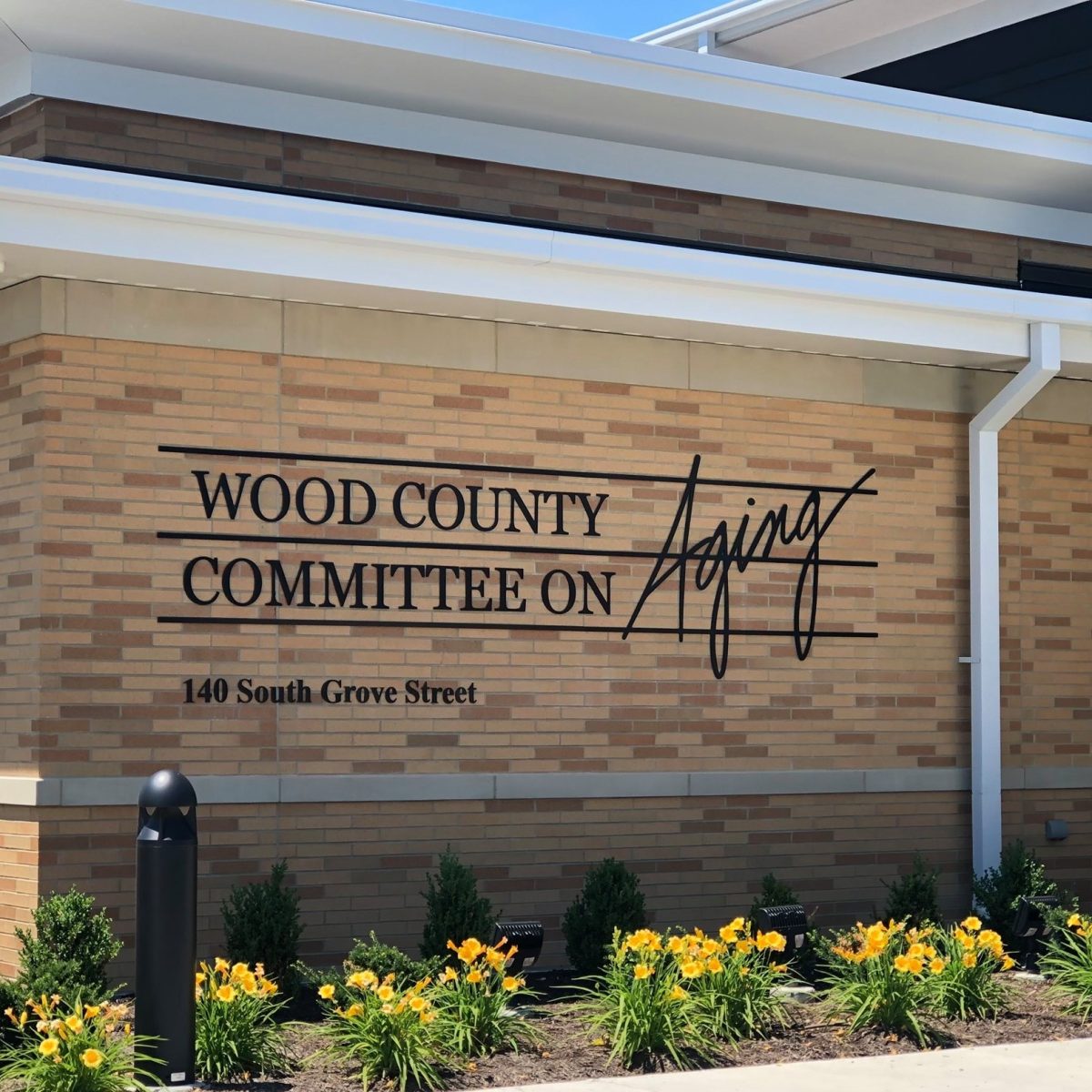
The Wood County Committee on Aging (WCCOA), located at 140 S. Grove St., is the only warming station in Wood County, leaving many without a place to go in cold weather.
A warming station is a heated facility open to the public during dangerously inclement weather, providing shelter during emergencies. WCCOA’s services also include lunch and dinner meals, minor home repair, health screenings and transportation for Wood County residents over 60.
However, on Jan. 20 and Jan. 27, due to low wind chill and extreme temperatures, WCCOA was open exclusively as a warming station only from 8 a.m. to 5 p.m. Temperatures reached lows of -15 and -17 degrees, respectively, during those nights, according to the Weather Channel’s monthly report.
Wood County currently does not have a homeless shelter or any other community facilities open as warming stations.
The nearest homeless shelter to Bowling Green State University is St. Paul Community Center in Toledo, 20 miles from campus. This trip would equate to a 27-minute drive, but due to its reliance on the I-75 N highway, it would be nearly an 11-hour walk and a 200-foot climb, according to Google and Apple Maps.
The City of Bowling Green Community Development Department Director, Matthew Snow, explained the city’s current plan to accommodate homeless individuals.
“The City of Bowling Green contracts with The Salvation Army to provide transitional housing assistance for individuals experiencing homelessness. Through this program, individuals can receive up to two weeks of lodging in a local hotel, as well as referrals to supportive services,” Snow shared in a statement to BG Falcon Media.
Additionally, the Wood County Housing and Homelessness Coalition “is currently evaluating the feasibility and sustainability of a shelter in Wood County,” Snow wrote.
BG Falcon Media contacted other community centers that could potentially provide warming shelter services.
Rev. Dr. Jeffrey Schooley, the pastor of the First Presbyterian Church in Bowling Green, explained that while the church did not offer a warming shelter, no one had reached out to them before.
“You have identified a real blind spot in our community,” Schooley said. “It’s part of a broader theme and trend of just basically ignoring the economically marginalized. My church hosts BG Song [and] BG Save Our Neighborhood, which is a working group looking at homelessness, housing, and security. So, this is all part of a piece. But a warming shelter is an easy problem to solve. You’re right, churches could and should step up.”
However, establishing a warming shelter is not just about opening the doors to the public.
“Insurance companies dictate so much more than we tend to realize,” Schooley added.
While he mentioned that, to his knowledge, there was nothing prohibiting the First Presbyterian Church from opening a warming center, it may be a challenge.
“If we are found going above and beyond the normal scope of what the presumption of what a church should do…and then there is an incident, the concern is that the insurance company won’t pay out to that incident, that the church itself would be on the hook.”
Margie Harris, the facilitator for the First United Methodist Church’s food pantry and a member of the Wood County Housing and Homelessness Coalition, has begun working with her Missions Committee on establishing a homeless shelter in Bowling Green.
After touring the City Mission of Findlay’s low-barrier homeless shelter, Harris began searching for a location.
“Unfortunately, we cannot have it at our church, because we do have a daycare located there…But our church is willing to be the fiscal agent and the administrator of it [the homeless shelter],” Harris expressed.
“It [the homeless shelter] would just be open from November through March, seven days a week, 8 p.m. to 8 a.m.”
These hours would help combat the gaps when public locations like WWCOA, the Woodland Mall or the library are closed.
“We’ve always known there’s homeless people here in Bowling Green. It’s just that you don’t necessarily see them. They’re sleeping in their cars. We have heard of different little encampments…there’s a wooded area back there, that people kind of camp out in, in the nice weather, but where do they go when it’s cold?” Harris said.
Insurance, zoning, utilities, volunteers and funding are still concerns in creating a homeless shelter or an additional warming center in Bowling Green, but Harris hopes to find a solution for the coldest months of the year.
“I can’t reiterate enough that it’s going to take the whole community to pull together to do this,” Harris said. “It’s not just our church. It’s everyone that we’re going to need to pull from. It is a community-wide issue. It’s not just on one person or one organization to solve it.”








KB • Feb 9, 2026 at 9:19 pm
We have all that empty space in the mall. Why not turn that into housing of some sort? Each store area could house so many people and it would bring life back to the mall. Even if it’s just affordable housing, and not owned by some of these local landlords that sell to the college kids