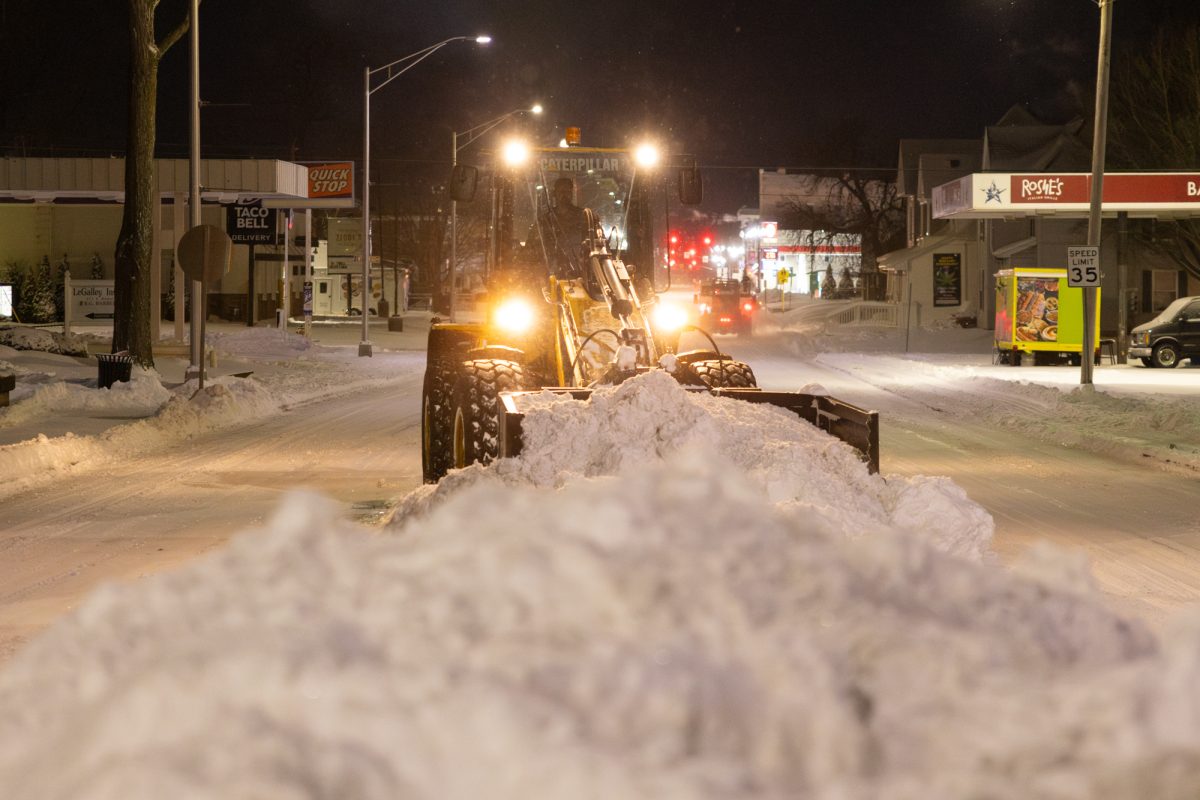
As students raise concerns about cold conditions, the Undergraduate Student Government’s (USG) cold weather policy from last year outlines the university’s approach to keeping students safe during weather emergencies.
The USG president said he believes the policy played a role in recent morning class cancellations.
“We passed SB 2024/2025–01, which is a formal request and recommendation to the university administration for a more holistic, safety-centred cold-weather approach,” said Tiago Gaboardi, USG president. “The bill urges the university to consider student health, commuting risks, access to resources, communication timelines and academic flexibility during extreme cold events, while recognizing that the final authority rests with university leadership.”
USG proposed the bill because students who are commuters, international students or students without winter resources were impacted when the weather turned bad.
“USG raised this issue due to sustained student concerns regarding extreme cold exposure, unsafe commuting conditions and inequitable impacts on students—particularly commuters, international students and students lacking adequate winter resources,” Gaboardi said. “The bill reflects USG’s responsibility to elevate student safety and well-being while acknowledging the university’s compliance obligations with state-mandated instructional hours.”
Gaboardi said USG believes the bill influenced two of the class cancellations this semester on Monday, Jan. 26 and Friday, Jan. 30.
“While USG does not make cancellation decisions, the bill was read by the president, provost and chief financial officer (CFO), who are the primary administrators involved in class-cancellation determinations,” Gaboardi said. “All three acknowledged that student safety is always the top priority. I believe the bill contributed to a more holistic and safety-centred decision-making framework during those mornings.”
A university statement said the decision to cancel classes involved multiple factors.
“The decision was based on a number of factors, including learning community safety, campus operations, advanced weather forecasts and other weather-related factors, which allowed Campus Operations the time and space to keep campus open and operational,” Bowling Green State University said.
Even though this bill was passed last year before Gaboardi was elected president, it is still relevant.
“USG has continued to discuss the bill internally and in conversations with university leadership, particularly as it relates to student safety, hazardous weather conditions and communication expectations,” he said.
There have been no changes to the university’s policy, but Gaboardi said USG might take another look at the bill.
“University-wide, there has been no formal change to the official weather-cancellation policy. The university must still comply with Ohio state minimum instructional-hour requirements, and BGSU’s more compact academic calendar makes cancellations operationally complex,” he said. “That said, I strongly believe the bill encouraged leadership to take a more holistic, student-centred lens, even within those constraints. USG may revisit this issue in the future if conditions or institutional flexibility change.”
Gaboardi said he maintains a connection with administrators to relay students’ concerns about the weather.
“Historically, BGSU has been cautious about cancelling classes due to instructional-hour requirements. Nonetheless, USG remains committed to ongoing advocacy. As president, I also maintain direct conversations with [BGSU President] Rodney Rogers and other administrators to communicate real-time student safety concerns during hazardous weather,” Gaboardi said.