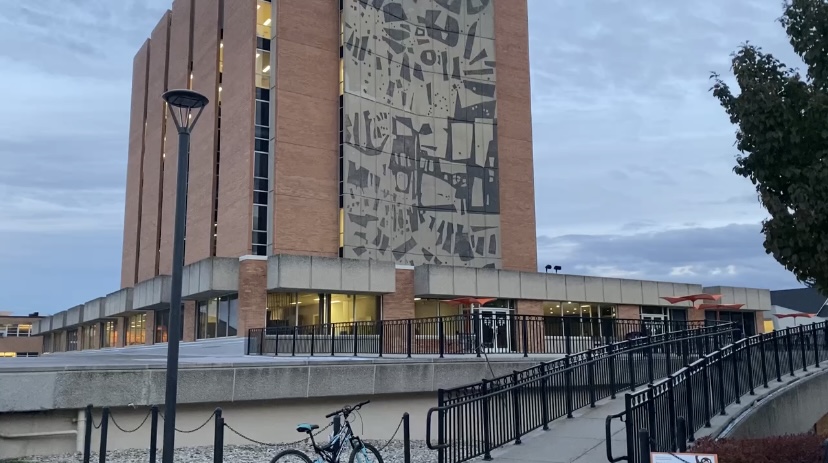
On Monday, March 9, from 10 a.m. to 4 p.m. in the Jerome Library’s Pallister Conference Room, the BGSU Center for Archival Collections (CAC) and ServeOhio will be hosting a hands-on service experience revolving around the expansion and preservation of women’s history.
The Cursive for a Cause event is a part of the AmeriCorps Service Week. Cecilia Seibert, AmeriCorps member at the Center of Archival Collections, is a part of the federal agency that works to tackle some of the nation’s pressing challenges, like education opportunities. The AmeriCorps Week of Service is meant to highlight the impact the organization has on the community.
“Members actively work to strengthen their local historical organizations and museums through projects such as developing educational programs, digitizing records and assisting with strategic planning to serve their communities and make their unique histories and stories accessible to all,” Seibert said.
The works that will be transcribed are all handwritten cursive documents that include substance related to the lives of women and their community involvement. Volunteers have the opportunity to make contributions to research by implementing these documents into the database.
“Transcriptions created during the event will be added into the CAC’s archives, with some becoming available to a wider range of researchers. By creating these transcriptions, participants will be adding their lasting impact for future researchers,” Seibert said.
Though it can be difficult to translate older handwritten records at times, Seibert and other professionals encourage volunteers not to worry about being an expert with cursive.
“This is an excellent opportunity to practice reading cursive, and training and guidance will be provided throughout the day if participants have any questions,” she said.
Researching online has become the ideal practice as it allows individuals to be able to access resources with ease.
“Creating transcriptions of handwritten documents is a crucial step in supporting accessibility for researchers by making them more accessible to a wider audience,” Seibert said.
For those who may not be able to travel and view the documents in person, they can now be given access from home. This also provides more accessibility for the online documents.
“Additionally, providing transcribed documents ensures that individuals can navigate historical documents using audio screen readers, enlarged text or other assistive technologies that are not possible when viewing the original document,” Seibert said.
Reading handwritten records can be difficult to read for people, and online tools like artificial intelligence (AI). Detecting the niche and customizable nuances of handwritten works can be difficult for systems to detect.
“Variations in writing, such as punctuation, abbreviations and spelling, are common in older documents, but difficult for AI to transcribe. Other physical factors, such as creases in paper and faded ink, can also make it difficult for AI to read writing on older documents,” Seibert said.
For more information and to register for the event: https://events.bgsu.edu/event/cursive-for-a-cause-transcribing-womens-history