
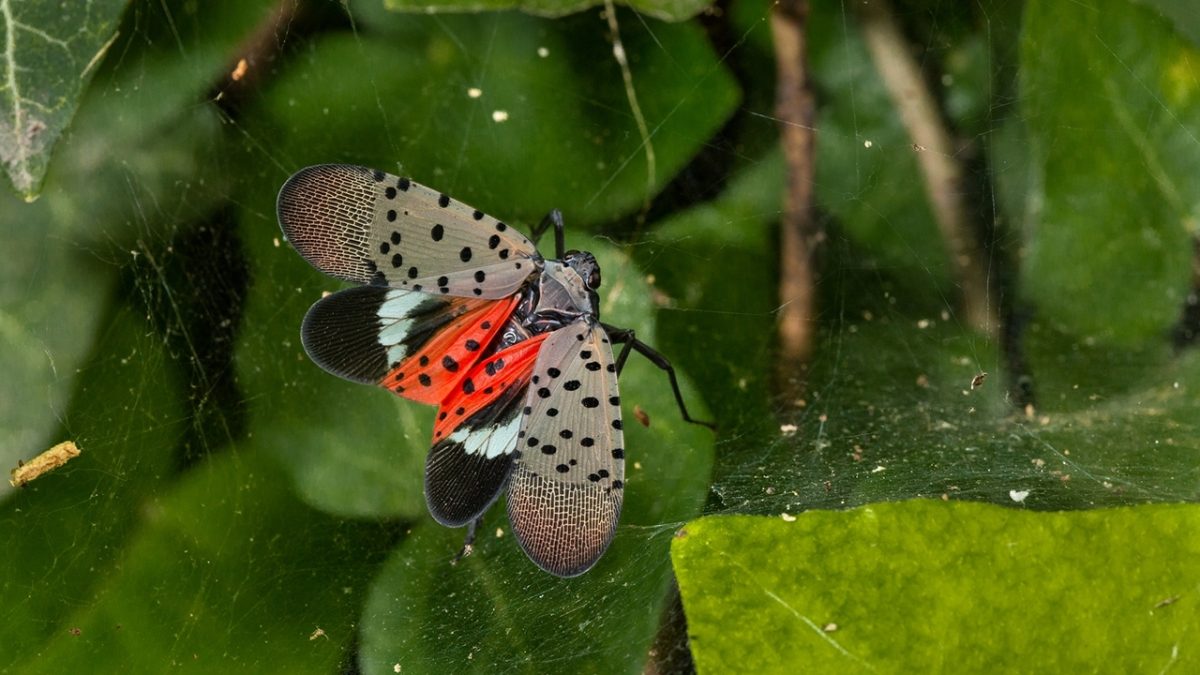
Last spring, an invasive insect flew into Bowling Green and locals are the ones tasked with keeping them away.
Red-spotted lanternflies originated from Asia and the Bowling Green Urban Forester, Adrien Lowien-Kirian, makes it clear that they cause no harm to humans.
“It [red-spotted lanternfly] is a sap sucking insect that came from Asia and primarily creates more of a nuisance than major issues. They don’t bite or sting humans. They’re not going to cause any harm to you if they land on you,” Lowein-Kirian said.
What the insect does cause harm to is trees, but it may be beneficial.
“What happens is what we call honeydew, which is actually the defecation from the insect, can build up and cause mold issues and things like that,” Lowein-Kirian said. “They can occasionally cause harm to some species of tree, although the tree that it causes the most harm to is also an invasive species from Asia, which is its native host, which is the Tree of Heaven and that can actually kill that tree, but we don’t kind of enjoy that tree here either, because it’s also quite invasive and displaces a lot of our native species as well.”
It is unknown exactly how the insect first came to America, but Lowein-Kirian believes it was through shipping containers.
“What most experts think is that it came in on shipping containers, which is also how it tends to get around across the United States, as well as it uses egg masses on railroad cars, on cars, on busses, trucks and that’s how it gets from area to area,” Lowien-Kirian said.
After migrating from Toledo and Perrysburg, red-spotted lanternflies were first spotted last year.
“I was expecting to see them in Bowling Green this summer and we did, in fact, have had quite a few sightings of them, although they’ve not been seen in huge masses that we’ve seen in other areas, like I said, around Toledo and Perrysburg, where there’s just swarms of them,” Lowien-Kirian said.
Red-spotted lanternflies gravitate towards the Tree of Heaven, which is also an invasive species from Asia.
“Their native host tree is the tree of heaven, which is an invasive tree often found in unimproved areas or unmaintained areas,” Lowein-Kirian said. “It’s their favorite, but they will go to other trees, kind of like when you go to a buffet and they might have your favorite food, you’re going to have some of that, but you’re also going to try the other things.”
Since Bowling Green State University (BGSU) is “very well maintained” by the ground staff, not as many have been spotted on campus compared to the city.
“I know there’s been a few spotted on campus, again, not a ton. The area is mostly very well maintained through the ground staff,” Lowein-Kirian said. “There’s not a lot of the host species of the Tree of Heaven around, but you will see it on other species.”
After expecting to see “more and more in the future,” Lowein-Kirian advises students and locals to kill the invasive insect.
“As far as maintaining them, the best thing is to squish them if you see them,” Lowein-Kirian said. “For property owners to keep them away, the best thing is to try to remove the Tree of Heaven. If they don’t have that host plant, they’re less likely to hang around.”