


BGSU cross country/track and field returned to the forefront of news after a historic 2024-25 season, highlighted by two Mid-American Conference (MAC) titles.
However, amidst all of the success, an emotional and underlying story was developing behind the scenes involving a runner’s return to form: Josh Risko’s journey back to the track.
Josh Risko, a native of Mentor, Ohio, started his running journey at a young age surrounded by athletics.
“He’s liked a number of different sports: baseball, football, basketball and soccer. I remember about four years old, him running around the neighborhood. He got the bug, and he just started one day and started running,” said Marty Risko, Josh Risko’s father. “I still remember running with him; it was about a 10-and-a-half-minute mile at four years old.”
But Josh Risko did not fully commit to running until middle school.
“I started back in middle school,” Josh Risko said. “My older brother ran when he was in middle school, so I decided to kind of follow in his footsteps and took off from there; it ended up being a lifelong thing from here on out.”
He immediately picked up the sport like a natural, outperforming many in his age group.
“[Josh Risko’s middle school coach] took him under his wing and started putting him in some programs in seventh and eighth grade with the high school kids. He was at Spire (Academy), which is an indoor running program. He was doing one race, and he came home and I said, ‘Josh, how’d you do?’ He said, ‘I beat two kids with beards today,'” said Laurel Risko, Josh Risko’s mother. “Even back then, he was beating bigger and stronger kids. So, he’s always been good at it.”
While Josh Risko’s running journey continued into high school, it turned into much more than just the races.
“You’d see his interest level in the coaches as he was getting older, all the way in eighth grade, it was growing stronger. Then in ninth grade, you just saw that cohesive family in the high school community with Josh and that running community,” Marty Risko said.
As his running times continued to improve, Josh Risko made the decision to commit to Bowling Green State University.
“I took a visit to a couple of different schools, a couple in the Buffalo area and the Pennsylvania area, but then once I took one visit here, I landed. My mom went here, and I fell in love right away with the campus, the team and the coaching staff,” he said. “It was the perfect fit and I never looked back.”
At Bowling Green, Josh Risko quickly endeared himself to his new teammates and friends.
One of his closest friends and teammates, Bryce Weber, committed to BGSU alongside Josh and became his roommate freshman year at McDonald Hall.
“Josh and I have actually known each other since probably seventh grade. He went to the neighbouring high school. We went to running camps together, kind of got to know each other through that, and then we ended up being high school rivals, almost. We would race each other almost every weekend, going back and forth in both cross country and track. We got to know each other pretty well through that,” Weber said. “Things just kind of aligned, and we ended up coming [to BGSU] together. So, I’ve known Josh for a while; he’s been a huge part of my life.”
Josh Risko made another close friend in teammate Luke Woolard, who is a class younger, during move-in day at The Oaks, one of the main dining halls on campus.
“I could just tell right away that he was just such a great person to be around; he always had a smile on his face. There’s no way to really upset him. He’s always happy; he was just positive. You really could never bring him down. He was someone you would walk into the room, and he was always making everyone laugh, making everyone smile, and it was pretty clear right away,” Woolard said. “I remember even our first few conversations, you knew right away, he’s going to be a fun person to be around, he’s going to bring a lot of energy to the group, bring a lot of energy to the team.”
One of his best connections on the women’s team is Emma Hellwege. The two quickly connected the first time they met.
“I remember meeting Josh at a bonfire at the guy’s cross country house the first week we were on campus, and he just has a very easy-going personality. I remember him just striking up conversation immediately,” Hellwege said. “From that point on, we just clicked because he is so easy-going. I just remember him coming over to our dorm and playing Mario Kart and just having an absolute blast all the time with him.”
Cesar Arellano, another teammate of Josh’s, became a close friend and mentor to him.
“I first met Josh because he was an incoming freshman and I was a senior on the team, a fifth-year. There was a big age gap, but from the beginning, he had a really good sense of humor. We really just bonded right away,” Arellano said. “Since then, it’s been more of a mentorship. I love Josh.”
Josh Risko had a strong start to his collegiate career, competing in all six races throughout the 2022 cross country season.
“It started off rough, I’m not going to lie. I was very shaky at the start of my first ever 8k. I actually passed out from heat,” Risko said. “After that, I started finding my groove in the rest of the season…just a lot of fun just progressing and hitting high mileage.”
Despite the early bumps in the road, he eventually posted a personal best 8k time of 26:42.9 at the MAC Championships, which was also good enough to secure him a spot on the regionals squad.
“They’re all enduring the same thing by doing long distances, just pounding the pavement every day, no matter what the weather’s like. They’re all in it together, and they share the pain, the gains and all the enjoyment that goes with it and the milestones they each achieve,” Marty Risko said. “You’re competing with much bigger, faster, stronger athletes in the college level, but you still have to put the work in…I saw Josh his freshman year, and there was a determination about him.”
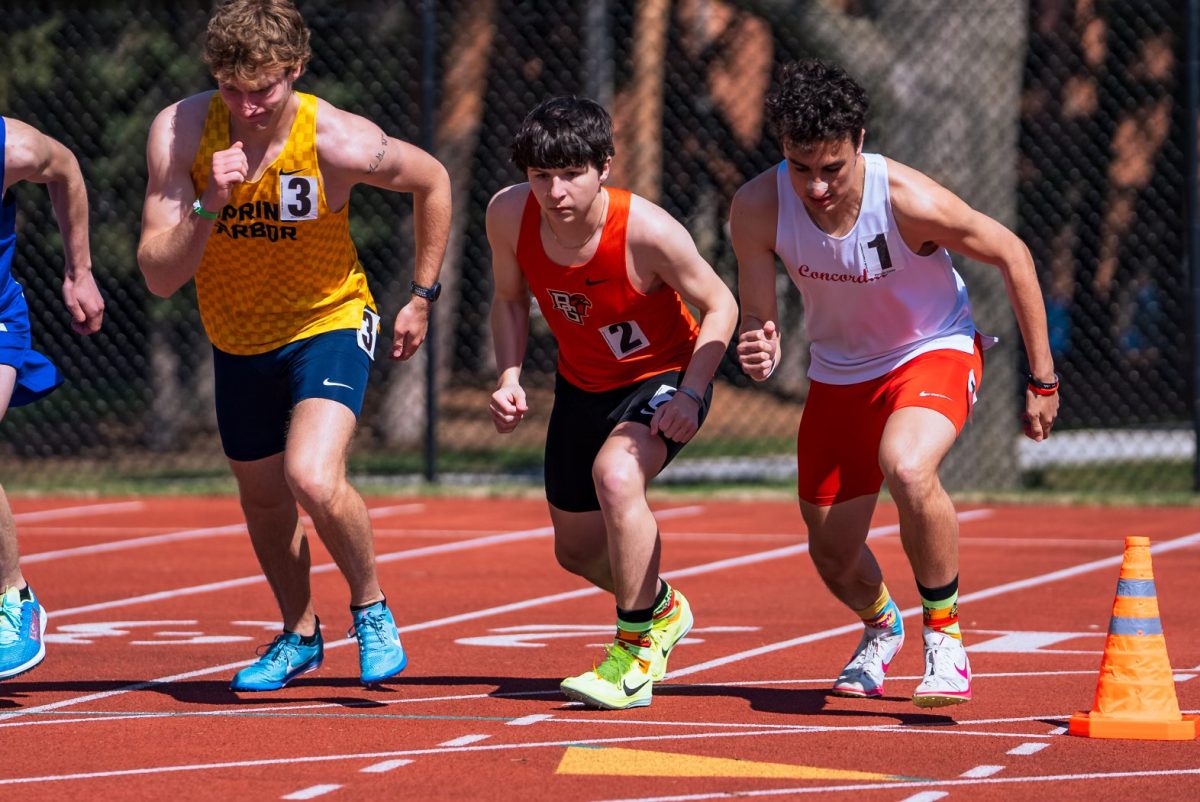
However, in the summer of 2023, before his sophomore year, Josh Risko began experiencing strange symptoms, beginning with losing some sight out of his right eye.
“It started out with him losing his sight. Him being the person he was, he just kind of played it off. But I always knew something was going on,” Weber said. “I was pretty concerned because even just losing your eyesight is a huge thing, and living with him, we’d be walking together and [he’d say], ‘Yeah, man, I can’t see out of this part of my eye.’ I’d be snapping underneath his eye, and he couldn’t see it.”
As he continued to have problems with his vision, friends around him started to get more concerned.
“It was crazy because he’s like walking back with me (from class) and he’s like, ‘Emma, my peripheral vision, like if you’re on this side of me right now, I can’t really see you,'” Emma Hellwege said. “I’m like, ‘Aren’t you kind of concerned?’ He’s like, ‘Yeah, I told my mom. She’s like really scared, but honestly, I’m okay with it, like it’ll figure itself out.’ I’m like, ‘You’re telling me you just woke up and you’re trying to think like it’s all fine and dandy. Maybe you should figure that out.'”
Along with his worsening eyesight, Josh Risko began feeling tired more often, with fatigue leading him to dropping out of the first two races of his sophomore season – the Akron Invite on Sept. 1, 2023, and the Mel Brodt Collegiate Open in Bowling Green on Sept. 15.
“It started early in the fall; he struggled a bit. With some of his early races, he didn’t finish, if I’m remembering correctly. There was a point where I don’t think we were going to take him to some mid-season races just because there was some uncertainty about what was going on,” said Lou Snelling, head cross country/track and field coach. Then, he started talking about his vision loss, and that was a bit scary at that point because, definitely not a doctor, but not a good thing.”
With no signs of improvement with his symptoms, Josh Risko made the decision to fully focus on his health instead of running.
“I stressed this for a couple of years; I always listen to my body. But this one was different, where I just started feeling fatigued and tired all the time. I was telling a couple of my friends and parents, I just don’t feel right, like something’s not clicking like it used to. Running came a little more natural [to me]. Then, I was putting a lot more effort into times that felt easier in the past. Ultimately, when my eyesight started going, that’s when I kind of pulled the plug, and I was like, I got to focus on my health right now and take a step back from running.
At this point, Josh Risko’s parents started to seek help to figure out what was causing the abnormal symptoms.
“Laurel (Risko) and I were out to dinner on a Friday night, and Josh called us up to say that the team was going on a trip, and he said, “Hey, I lost vision in my right eye, I can’t see somebody’s head up. I can only see from their shoulders down in my right eye, but I can see out of my left eye. What do I do?” Marty Risko said. “So, I think that started the whole process there when we said something’s not right and something’s not hitting on all cylinders at this stage of the game. We got that call when we were out to dinner, so we hustled into Bowling Green, picked him up Friday night, and had him into an eye doctor on Saturday morning to a retinal specialist.”
As doctor’s looked at Josh Risko and his situation, it became a challenge to pinpoint exactly what was wrong.
“[The retinal specialists] were suspecting it was a detached retina, which they would have had the surgery table ready for him to put the eye back together if it was a detached retina,” Marty Risko said. “As they diagnosed that, they looked and said that it is more like an optic neuritis, which is a temporary situation, and to keep an eye on it and monitor it. So, again, what we did was we kept an eye on it, monitored it and took him back to school.”
However, Josh Risko’s situation did not improve back at Bowling Green, leading his parents to seek more help.
“I was at church where I was ushering, and I was talking to my friend, the head usher, and he said, ‘How’s my buddy Josh doing?’ I said, ‘He still can’t see, I don’t get it.’ He said, ‘My sister-in-law’s an eye doctor in Toledo. When you’re home, why don’t you take a ride up there and get him into the office by her. Do that and let’s see what’s really going on,'” Marty Risko said. “We went to this eye doctor, and when she finished her exam, she came out and she looked more like a mother than a doctor and said, ‘Where do you want to take him? To Ann Arbor, Michigan, or to the Cleveland Clinic?’ I said, ‘What’s wrong?’ She said, ‘I don’t know, but we’ve got to figure this out, and we’ve got to do it pretty quickly because he failed the vision test in his right eye, and he was down to about 25 percent vision in his left eye. I’ve never seen this before.'”
But answers did not immediately follow for Josh Risko.
“So, then we put him into the Cleveland Clinic as soon as we got home. He was in there for a week, and they were treating him for symptoms similar to a multiple sclerosis, trying to figure out what was exactly going on,” Marty Risko said. “Then it became a wait-and-see game. We took him back to Bowling Green after they released him from the hospital under observation, and it just became a waiting game.”
In the time following this observation, Josh Risko’s symptoms didn’t improve, so he went back to the Cleveland Clinic for multiple MRIs, which ultimately led to a new discovery.
“I got a call after the last MRI from the neurosurgeon who said, ‘Hey, I think it’s time we have to do a brain biopsy when Josh is done with school. [Dec. 11] was when he had it done, and he said, ‘Well, I’ll leave it to you to tell Josh what’s going on, but I want him in the hospital on Saturday, and then Monday, we’re going to do a brain biopsy on him.’ He said, ‘I suspect it’s cancer, but I am only about two-thirds certain right now. But right now, what I’m seeing is a tumor about the size of the first knuckle of your thumb. So that big and that far around the first knuckle of your thumb, lying on his right optic nerve. I don’t know if it’s cancerous or if it’s non-cancerous, but we have to get to the bottom of this right now,'” Marty Risko said. “Josh gets in the car and says, ‘Hey, I finished finals, what do you think?’ I said, ‘Well, that’s good you finished finals.’ He started telling me about his grades, and I was half paying attention to them because I had something else to tell him. I told him, ‘Hey, Josh, life’s going to change tomorrow. We’re taking you to the clinic on Monday, you’re going in for surgery, and then we’re going to figure out what happened.”
The results of the scan affirmed the doctor’s fears.
“I remember Josh went into surgery later in the evening, and then about 9:30 or so at night, the surgeon came out. Laurel and I, my mom, my sister and my sister’s best friend, who are both nurses, the five of us were sitting there and that’s when the neurosurgeon said, ‘I’m 90 percent certain this is a form of brain cancer, and in one week, pathology will acknowledge that for you,” Marty Risko said.
With things moving at a lightning-fast pace for the Risko family, the doctors at the Cleveland Clinic offered a reassuring plan of attack with treatments.
“Within the week, we were called from the Cleveland Clinic pediatric cancer department by the nurse. We had a Zoom meeting scheduled with the doctor. They sat down, introduced themselves and said, ‘We’re going to be a family, and the next steps for this whole process are going to be chemotherapy. We’re going to do four rounds of chemotherapy over three months, and then we’re going to do one month of radiation treatment for you Josh. After that treatment, you should be cancer-free,” Marty Risko said. “So bear with us all for six months, we’re going to be a tight-knit family for six months. We’re going to try and get you in and get you out and make sure that uh you’re back in college and back to a normal lifestyle um after this is all done.”
The diagnosis shocked Josh Risko’s world and brought it to a jarring halt.
“It was scary for sure. I mean, I remember just kind of talking with my dad and mom through it all, and nobody ever thinks about getting cancer, especially at such a young age. I was coming off the best year of running, and it felt like everything just started crashing down,” Josh Risko said.
The news also heavily affected Josh Risko’s family.
“My family took it very hard. I mean, they’ve known me for such a long time being such a healthy individual, they’re shocked to hear the news,” Josh Risko said. “My mom, I remember her just breaking down into tears. My dad even broke down into tears, that was one of the first times I’ve seen him cry in a long time.”
Along with his family, Josh Risko’s friends and teammates also had a hard time taking in the news.
“I remember getting a text message and then facetiming him, and I was just like so distraught. I remember going downstairs to my mom and saying, ‘I can’t believe that this is happening to a close friend, let alone someone who’s 20 years old.’ It was very off-putting; it was unsettling,” Hellwege said. “I just remember questioning why him, why now, of all times? It was very, very odd to me; I just had a lot of questions.”
The diagnosis was a gut-punch to Josh Risko’s roommate.
“I was pretty upset. You know, I felt for him. I know, I can’t imagine, you know, what he was going through. I got so close with him. I know how much being at school and being around the team and everything meant to him,” Weber said. “I can’t imagine just what was going through his head. I felt for him.”
For some, watching a close friend diagnosed with a condition of this significance marked uncharted territory.
“Everyone was just kind of like really shook. No one knew what that really meant. You don’t think that would happen to someone, and it was the first time I had ever had anyone in my life go through cancer,” Arellano said. “So, it was definitely just shocking to hear that from him.”
After getting officially diagnosed with suprasellar germinoma, a rare type of brain cancer, on Dec. 18, 2023, Josh Risko began chemotherapy treatment just four days later on Dec. 22.
“He did chemo, and then on the days he wasn’t doing chemo twice a week, he had to get blood work done. So, we were down at the [Cleveland Clinic] about three times a week,” Laurel Risko said. “How fast it happened. They told us he had brain cancer on Monday, he had to get a port put in on Wednesday and he started chemo on Thursday.”
The toll of his treatment was not only physical but also psychologically challenging for Josh Risko.
“It was very tough mentally, I mean, it was hard to wrap my head around the idea that I’m going to be doing this for the next couple of months.”
As Josh Risko went through his tough treatments, he received large amounts of support from friends and family. His roommate back at BG, Weber, kept in contact and helped him stay in the loop with how the team was doing.
“Josh and I, we definitely stayed in touch. I think it was, you know, he’d always ask me how workouts and stuff like that were going. I talked to him about running, or we’d usually FaceTime every weekend. And I’d be like, you know, you know, this is what happened throughout the week, you know. This is what went down, you know. Here’s all the little stories and everything that you might have missed,” Weber said. “And I also, I’d say, I leaned on him a lot for, like, some advice, you know, with classes and schoolwork and my personal life. I would ask him. He was kind of my outlet, like, the person that I talked to the most and leaned on. So he was, I know he wasn’t at school, but he was still that person that I leaned on.”
Teammates also made long drives to visit Josh Risko at the hospital to support him.
“During that time, I remember sending a lot of thoughtful messages to him. Then, from that point, we all planned. It was a group of, I want to say, six of us that planned to go to Cleveland. For me, I’m from Indiana, so it was about a five-hour, five and a half-hour drive to go see him. But we went there for New Year’s, and I remember seeing him for the first time. He had started treatment at that point. Still at that point, I had seen him probably a few weeks prior to that, and he looked so different, and it was just very unsettling too,” Hellwege said. “But if you know Josh and his personality, he was able to rally with us, and none of us really brought it up; none of us really made it a point of interest because we wanted to make him feel as normal as possible at that point. I just was so thankful I was able to see him at the beginning of January. Then, I also saw him again in March, we went back down and saw him with a different group of people, but we were able to stay with him and make sure he was in good spirits, as best as he could be.”
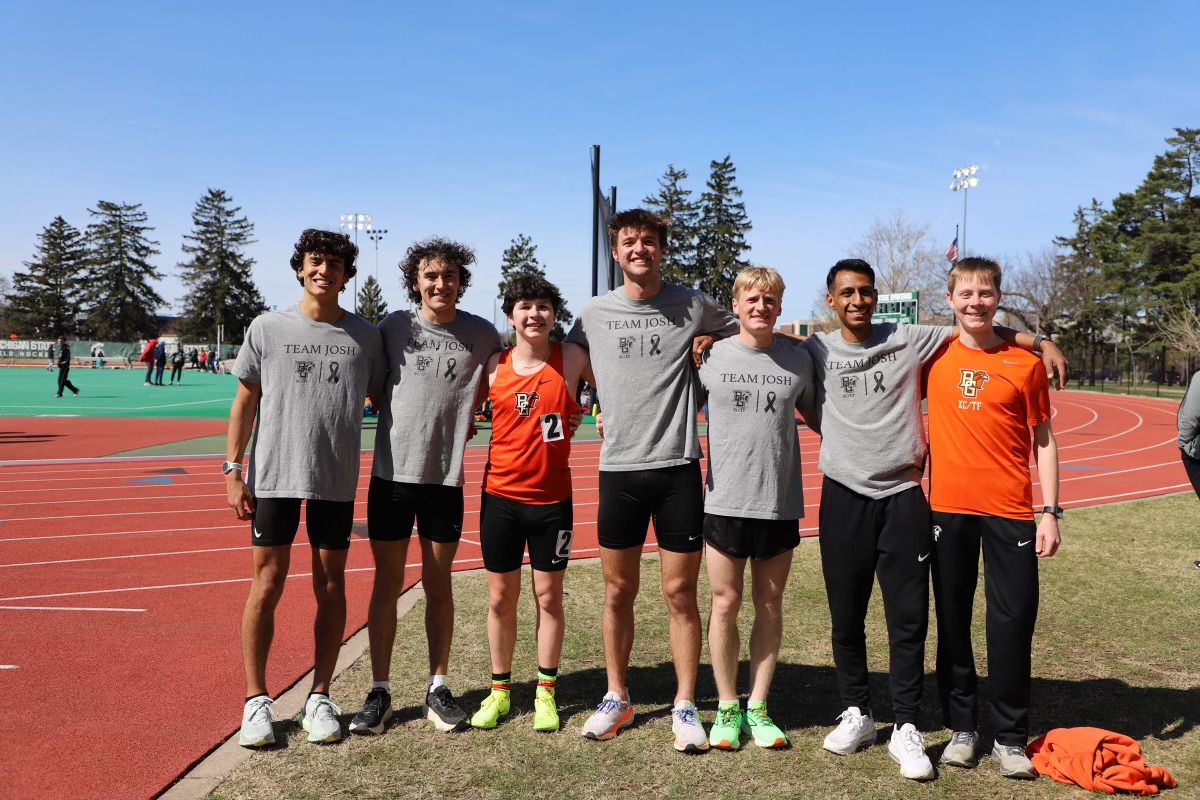
Back at Bowling Green, the team took action in numerous ways to show their support for Josh, including wearing ‘Team Josh’ shirts at multiple races.
“It was a pretty steady stream of like, well, how can we support? There were some different things that kind of happened throughout that next semester,” Snelling said. “Team-wise, we did some shirts and did some badges sort of thing for him, we would have at meets. There was a group that was really set on just staying very, very connected with him.”
However, along with the immense amounts of support he received, Josh Risko also helped bring the team closer together.
“It was amazing. I mean, I know for a lot of us, that was a lot of my motivation in these races. I mean, we know we were rocking the team Josh shirts all year, and he was just a big part of our journey,” Woolard said. “We were just going out and fighting for him and just putting it out, putting ourselves out there on the course for Him, knowing what he had been through and that he was still there by our side at all of our competitions this fall was amazing.”
Although the support helped, the cancer and treatment took a physical toll on Josh Risko.
“There were some days I couldn’t even get out of bed, I was just so tired and so wiped out,” Josh Risko said. “All together, it was such a rough process.”
Due to the tumor, which sat on his right optic nerve, moving aggressively toward the front of his brain, Josh Risko lost practically all sight out of his right eye.
Additionally, he lost some vision out of his left eye, although those effects were slightly reversed on that side because of the treatment.
“[The doctors] proceeded to tell us that had they not found it and addressed it, he would have been blind,” Laurel Risko said.
After a rigorous schedule of four rounds of chemotherapy over three months at the Cleveland Clinic, Josh Risko had to travel down to Cincinnati for four weeks of radiation.
Although the cancer and treatments took a physical toll on him, Josh Risko stayed upbeat throughout the entire journey.
“As he was going through this whole thing, he was so positive,” Laurel Risko said. “He’s so fun and so funny. Even throughout the whole ordeal he kept his sense of humor and he was he was actually a lot of fun to be around. I mean, he went through hell. He lost all his strength, he lost his hair, he lost the semester at school, he got put through the mirror physically, but man, he just kept such a great attitude through the whole thing, maintained a real positive spirit.”
On Jan. 26, 2024, doctors found that Josh Risko’s tumor had shrunk, confirming the effectiveness of the chemotherapy and radiation treatment.
“Jan. 26, 2024, was one of the best days of my life. I got a call that my tumour had melted, and I was very excited to hear that news. My mom, I remember on the phone with her, she broke down crying,” Josh Risko said.
Then, a few months later, on Apr. 26, 2024, Josh Risko finished his final radiation treatment, 130 days after he was diagnosed. He was officially declared cancer-free just over a month later.
The news came as an enormous sigh of relief to all of Josh Risko’s friends and family.
“As soon as I found out he was cancer-free, it was just a wave of like thank goodness. I couldn’t imagine how bad that year could have been for him. But he never faltered in any way. If you reached out to him, he never seemed to be in bad spirits,” Hellwege said. “So, it was awesome to see how beneficial it was for him to just be over and done with it and be able to be done with that and look to new horizons from that point.”
From the day he was diagnosed to the day he beat cancer, support may have been the best medicine for Josh Risko.
“The community was huge in supporting Josh. Our church was big, the parish priests were big, and the people who prayed for Josh at the church. People asked, ‘What do we need?’ We said, ‘All we need is prayers; that’s all we want.’ The doctors and the staff of the [Cleveland Clinic] were phenomenal. The Cincinnati Children’s Hospital, the radiation department, those people were phenomenal, and that whole doctor and nurse staff, again, they all treated us like family,” Marty Risko said. “Josh’s name was on a lot of the prayer lists at a lot of the churches around the United States. Word of mouth was mentioned about Josh. The cross country team did a video about Josh and being strong in this cancer process. The family there from the Bowling Green was was amazing, too. There’s so many people. People that you don’t expect to see or meet in your lifetime, we all cross paths and have kind of shared in Josh’s trials, as well as his victories. When I say it takes a village, it does; it really, truly does.”
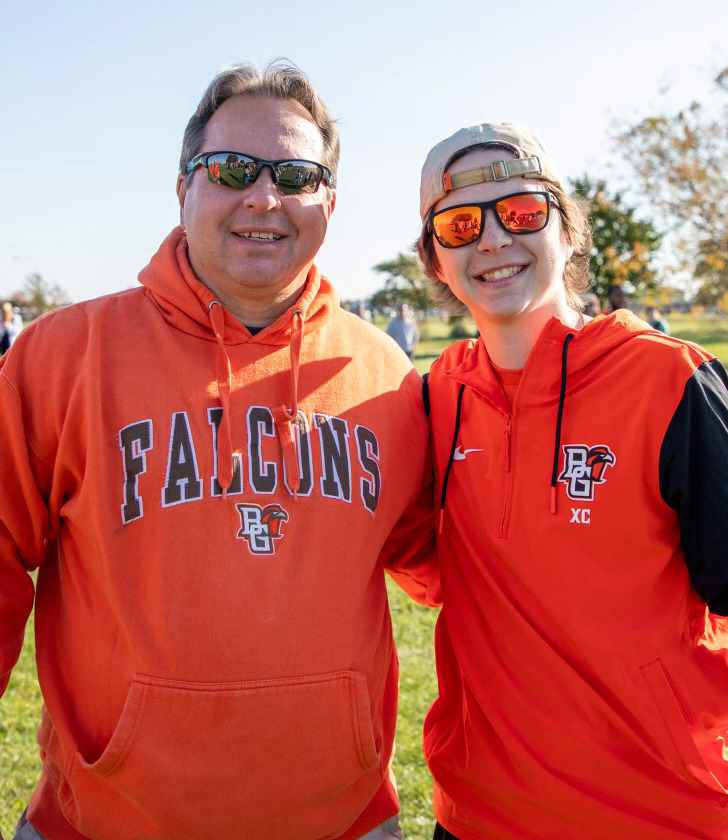
With cancer in the rearview mirror, Josh Risko set his sights on returning to running.
However, getting back into competition form was not an easy task, as he had not run for eight to ten months. But Josh Risko returning to the track was about more than just himself.
“I knew I wanted to get back into it, but I’d never really known how to. I never had to take a break from running for about eight years leading up to this point, so getting back into it was definitely rough. It was exhausting just getting out the door and running one mile, let alone the 50 I was used to,” Josh Risko said. “So, training, I knew it was going to be different and the path was not going to be easy, but I decided I was going to do this, not because I have anything left to prove, but I want to make an impact on kids like myself who went through the same or a similar journey.”
Although Josh Risko was eager to get back to racing, his coaches did not want to rush the process.
“I mean, just consistency, just kind of gradually building back in,” Snelling said. “From a training perspective, I think we were really thoughtful about not trying to do too much, too quickly, sort of thing.
With no firm timeline set in stone, the team wanted Josh to be as comfortable as possible as he built back towards his previous form.
“I wanted to make sure I helped him [race again]…[It’s] something that me and him were working really closely together on to make sure he can accomplish,” Arellano said. “We didn’t care about the time. We didn’t care about the place. As a mentor, I just wanted to make sure he felt good, felt happy, had fun.”
Finally, on Apr. 4, 2025, Josh Risko ran the 1500-meter at the Spartan Invite at Michigan State, 715 days after his last completed race.
“It all hit me about 20 minutes before the race. I didn’t know what to think of it at first, and then 20 minutes before the race started, I was like, ‘Wow, I really came such a long way in the past year.’ I was so excited, and I almost broke down crying before the race,” Josh Risko said. “It was truly one of my most memorable races; I’ll never forget it. Then, hearing my mom and dad come to the race, all my teammates down the sidelines, they were cheering me on. It was a memorable day for sure.”
Josh Risko finished the race in a time of 4:44.18, less than 25 seconds behind his last recorded time of 4:19.90 at the Elaine Leigh T&F Invite on Apr. 20, 2023.
“I mean, again, just, it’s so motivating to see that, for someone who went through a lot and pretty much had to restart. I mean, from a running standpoint, he pretty much had to restart with all the time he took off, and to see him come back and compete and still compete, you know, compete at a competitive level. You know, he’s running times faster than 99.9% of the world can’t run after everything he’s been through,” Woolard said. “So just to see how he’s fought back, and he’s running with us again. It brings a smile to my face every day. Just seeing him at practice, seeing him, seeing him out on the track, competing, it’s a joy.”
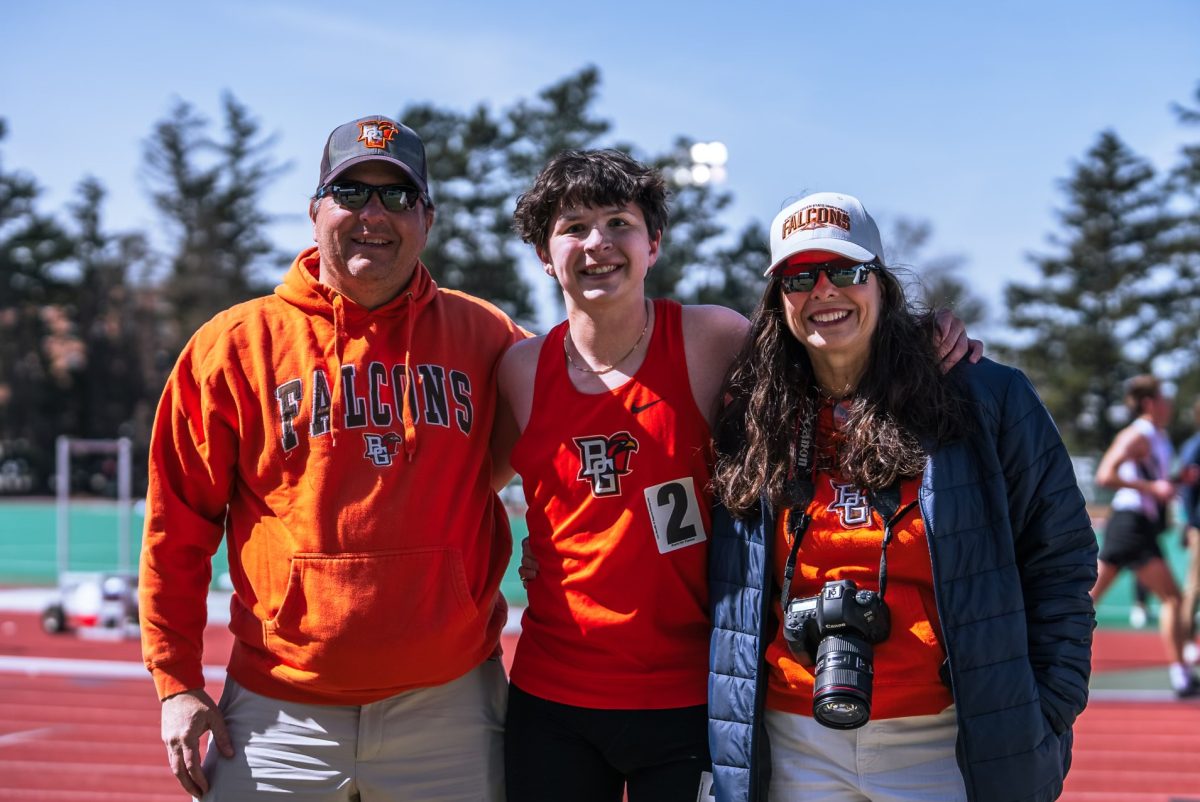
The impact of the race certainly wasn’t lost on the other teammates in attendance.
“It was amazing. I mean, how many people can say that they’ve done that and persevered, and then go out and race less than a year later, like that is the most incredible thing. I could never imagine anybody else doing it, except him. I’m so proud,” said Ben Myers, a teammate of Josh Risko. “To see him out there running, you know, we were cheering him on every single life he went by. Then, the last stretch, he bolts by someone. We all run across the field, and all go and congratulate him. It was a really special moment.”
The race served as a culminating moment for Josh Risko after his tough journey back to the track.
“I definitely talked about it with my family a lot, where I didn’t know if running was going to be in the cards again. I didn’t even know if I’d be here today, but luckily I am,” Josh Risko said. “I would say I learned how strong I actually am. I knew I was mentally tough, being able to do the sport, but being able to go through that process and then come back and do what I do again really showed me that I can do a lot more than I’ve given myself credit for.”
Although he is back to running and is cancer-free, Josh Risko lives life differently than before.
“I definitely take things a little more cautiously,” he said. “I was very, I wouldn’t say reckless, but I mean little things like playing basketball or football or anything like that, I kind of take a little more caution now that I only have one good eye. Even when i’m running, I don’t want things to fly into my eye or hit my eye, so I’ll normally run with sunglasses. So, that’s definitely been a little bit of an adjustment, but I’m definitely getting through it.”
His vision loss has affected him both on and off the track.
“It was definitely a big adjustment. I had to go through just to learn how to drive again with one eye. That’s a huge adjustment. Then, just little things like bumping into people on accident because they’re in my blind spot now or just a lot of things in my blind spot,” Josh Risko said. “I’ve also experienced with only one eye, I’ve been red-green colorblind. So, different shades kind of blending together now. So, when I’m running, I can definitely see it a little bit with a lot of green in the grass courses. So, a lot of things just trip me up or I’ll miss on occasion.”
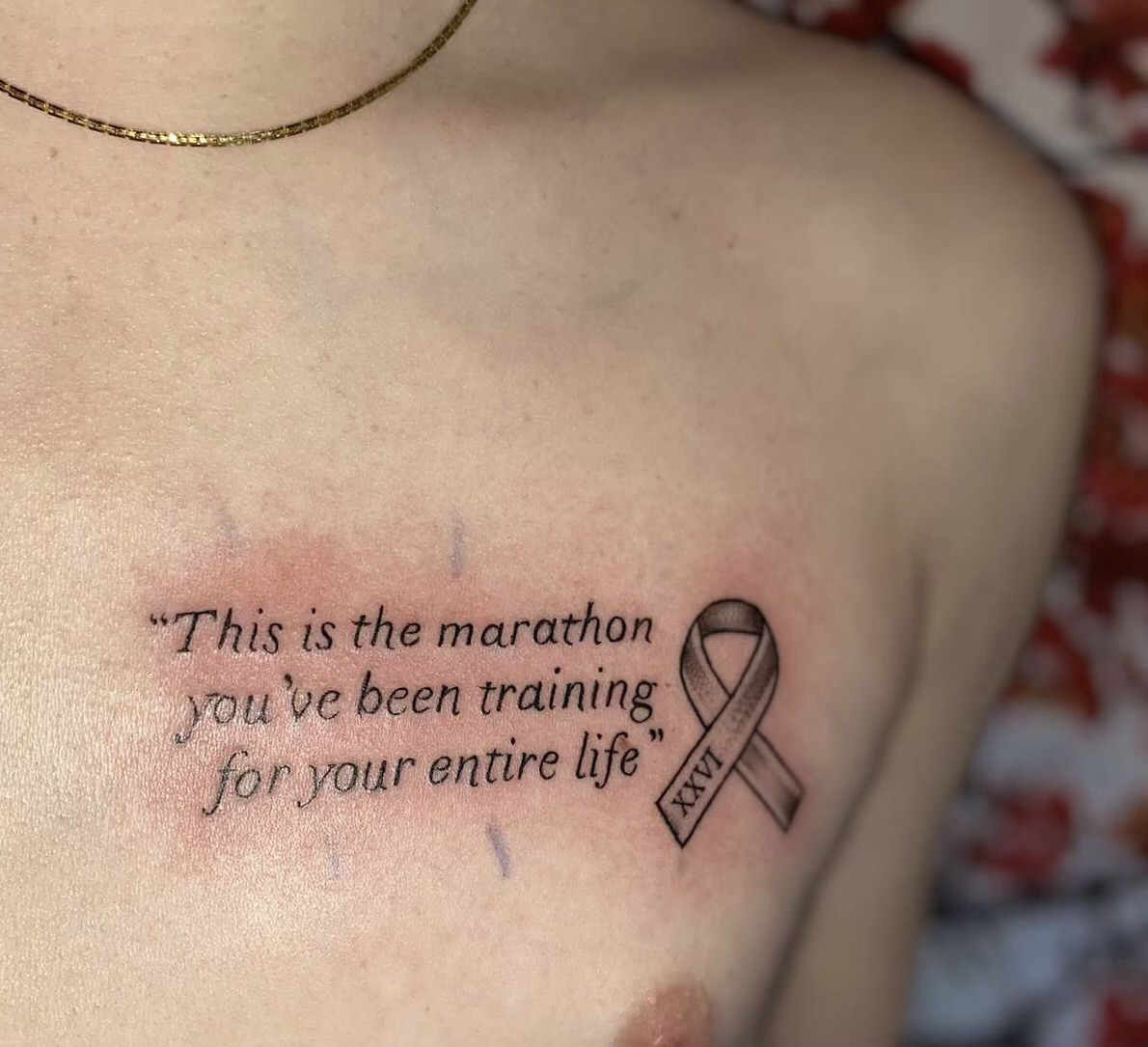
Something that Josh Risko will carry with him for the rest of his life is a tattoo signifying his battle.
“He has a quote above his heart, and it has the roman numeral 26 and a cancer ring. 26 has significant meaning to him. Jan. 26 was the day we found out the tumor melted. Apr. 26 was the last day of treatments, the radiation treatment. Then, as a runner, that defines the distance runner; there are 26 miles in a marathon,” Marty Risko said. “So, I thought that was pretty cool how Josh wanted to remember what he went through in this whole thing through a tattoo and the quote that he put on there.”
Josh Risko plans on continuing to improve on the track while also giving back to others.
“My goal is to get back into the cross country form and get back into 8k and 10k shape,” he said. “After college, I would like to work for a couple non-profit cancer organizations, just kind of give back and help kids like myself and give them a support network that they also need.”
Josh Risko’s upbeat attitude and positivity throughout his entire journey had effects on his teammates and those around him.
“I think the biggest thing that I’ve learned is that there’s always going to be light at the end of the tunnel. You know, whether it’s something, whether it’s something small or something as severe, that he went through, like, it’s all about perspective, it’s all about mindset, and that you can really accomplish anything you put your mind to,” Woolard said. “So for him, what he went through to go out and just, you know, he had a smile on his face the whole time. He always put his head down to work, and throughout the whole process, he was the same old Josh I met that first day. He always put a smile on your face. He always brought positive energy to those around him.”
Meanwhile, others realized not to take life for granted through Josh Risko’s battle.
“The biggest thing is that you can wake up and tomorrow will be different than today and different than yesterday. For him, it was like he woke up, and the day prior, he could see out of both eyes and then the next day, he couldn’t; that’s just mind-boggling to me. So, just kind of taking each day with a little bit more effort to key in on what you’re thankful for and what you’re grateful for at that point in time, because for him, it was just literally one sleep, and he woke up and things were different,” Hellwege said. “So, just being able to know that I’m taking each day with some sort of impact and knowing that today’s today and tomorrow will be completely different, and I can’t really vouch for what tomorrow’s going to be, so I’m going to make today what I can.”
In the end, Josh Risko’s journey strengthened the bond of all those around him.
“Josh’s story has really just transcended beyond something greater than the sport. He has just been someone who had a very positive outlook when he beat cancer. It’s something that he shared with me and with the team. Now we all kind of live that joy of seeing him out there with us,” Arellano said. “He’s just been someone who’s got the team a lot closer together. We all just really value each other now more than ever. It’s just something that we’re always going to remember, but we’ll remember the good and the bad behind us.”






Chris Burch • Mar 11, 2026 at 6:41 am
I closely follow the BG X Country teams.
This was a great read. His challenges far exceed anything most of will ever have to face. Congratulations Josh.
See you “on the move”. Pops Burch.
Tina Abrego • Aug 31, 2025 at 3:44 pm
Great article Tyler and Holden!!
Tom Pettinger • Aug 29, 2025 at 9:48 pm
Well written story. Thanks for telling Josh’s story.